 You growWe adviseWe automateYou growWe adviseWe automate
A German woman is admitted to an emergency department in Porto. The doctor speaks no German and has no access to her records. Even so, within a minute the top of the screen says that penicillin could be fatal.
A patient from another European country comes in. The doctor has minutes to choose an antibiotic. The very things that change that choice, such as a serious penicillin allergy, a blood thinner or a kidney value, sit a thousand kilometres away, in another language, in another system.
We built that entire path. From the nurse recording a value in one country, to the screen where a doctor in another country makes a decision. Not a sketch: a working prototype on a real openEHR platform, with an entry application that knows nothing about the viewer.
openEHR keeps the data separate from every application that will ever show it. FHIR exchanges it across the border. The layer in between may be thin, as long as it sits in the right place.
Book an intro call →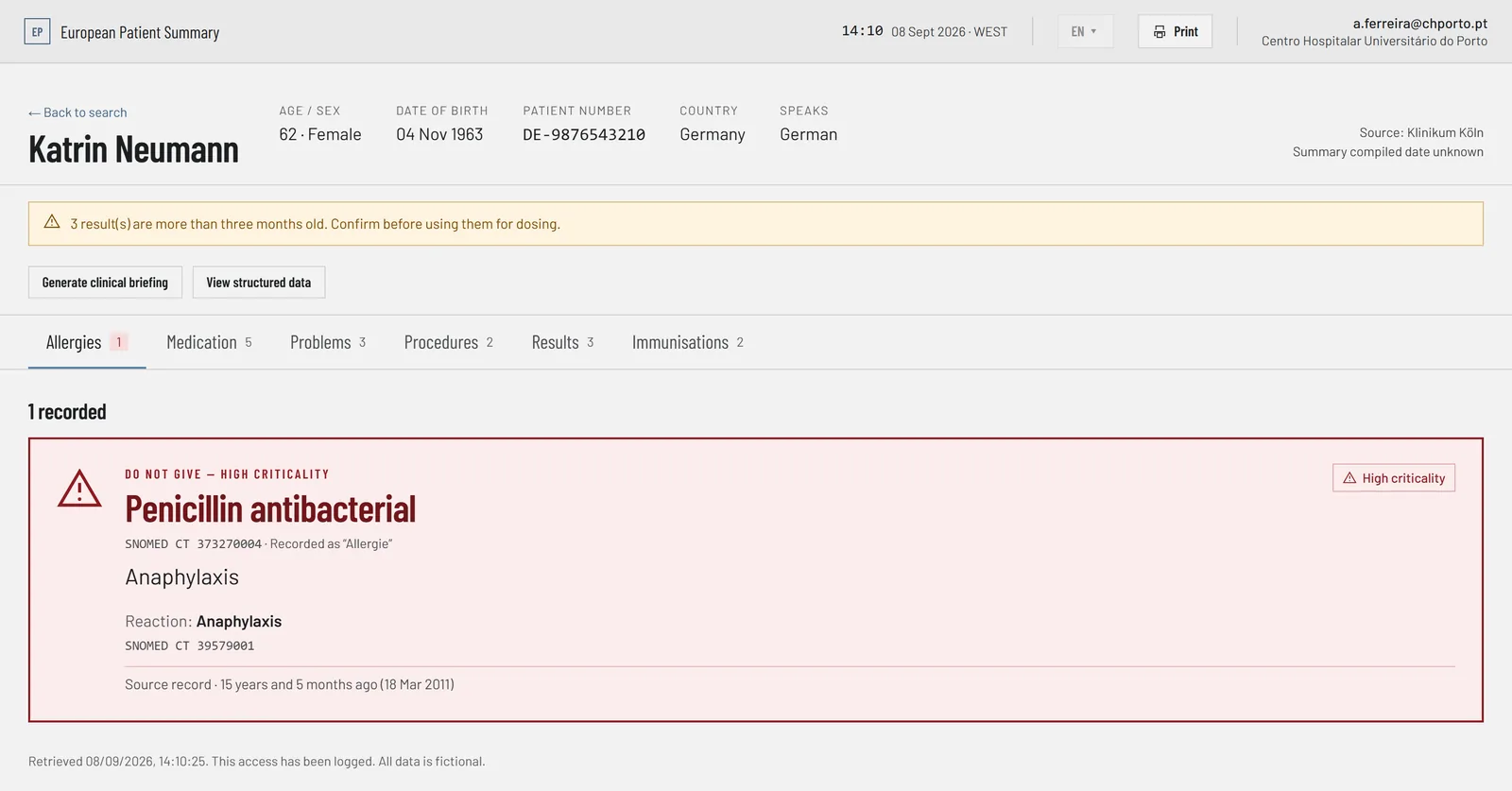
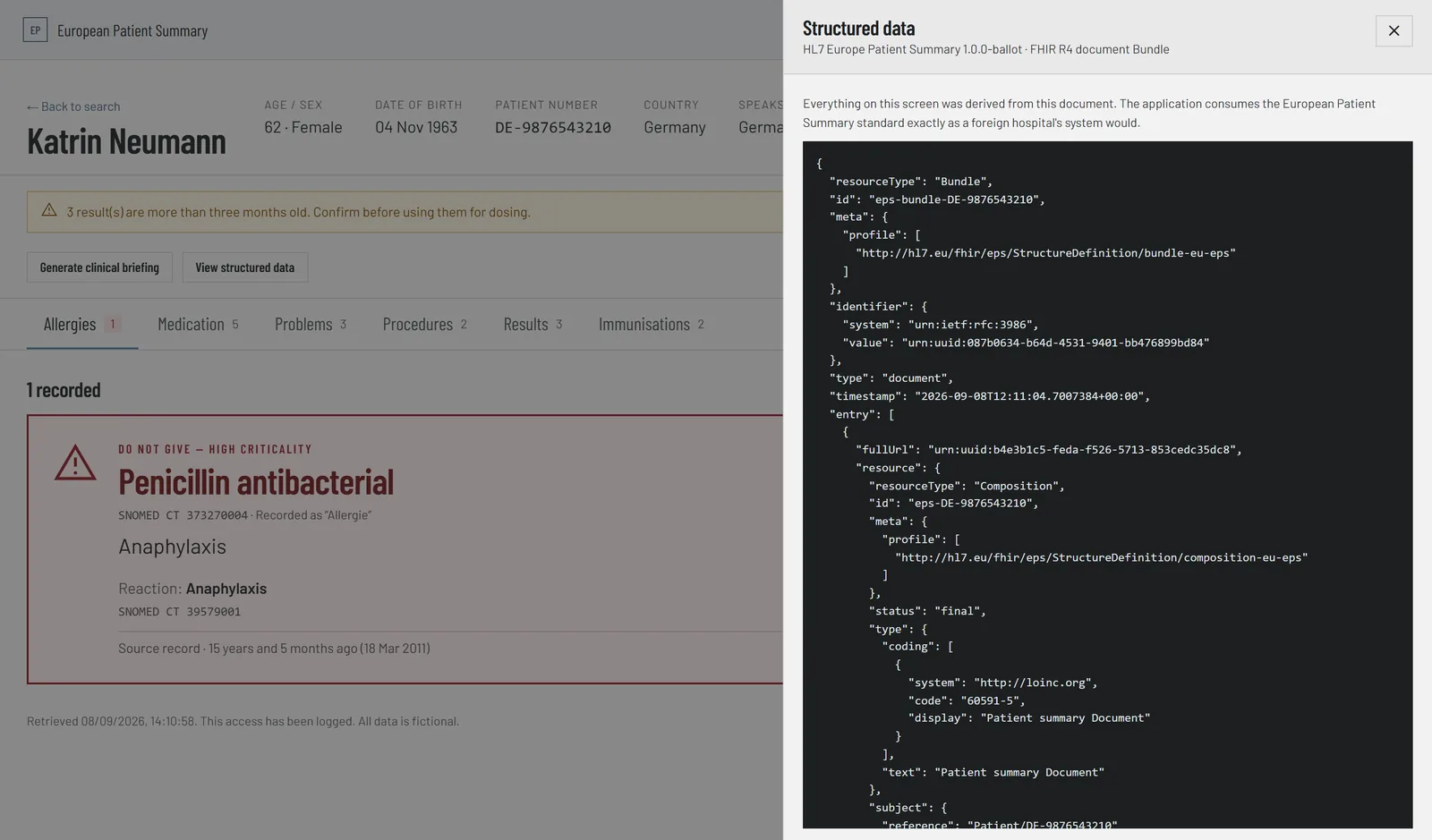
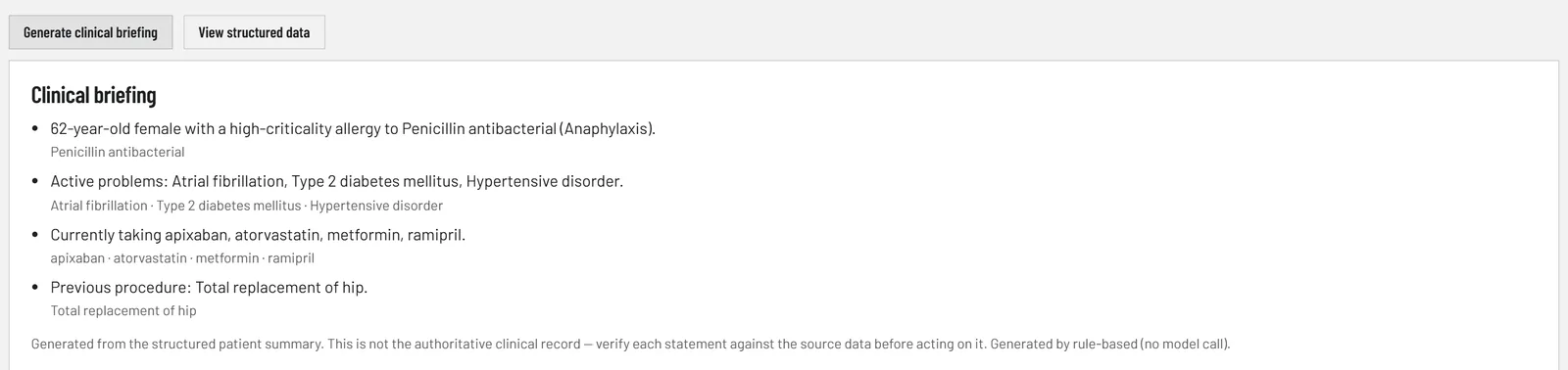
Not in screens, but in boundaries. Each layer knows exactly one thing, and that is what makes the whole thing portable.
Wherever data outlives the application that shows it, the same question applies. Healthcare is simply the domain where you see straight away what it costs when it goes wrong.
Prototype, built as a practical assignment. All patient data in it is fictional and synthetic.
Allergies on top, visible without scrolling. Then medication, then the active problems. That order comes from the clinic, not from a design.
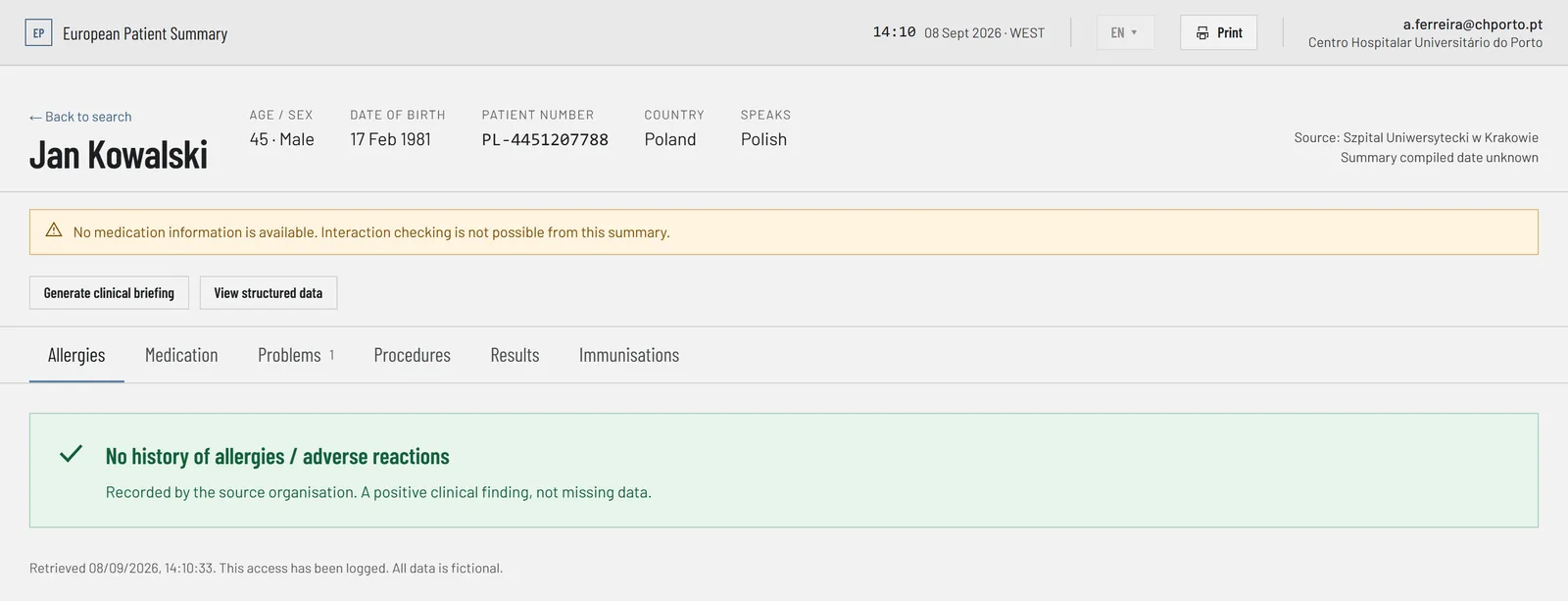
“No known allergy” is not the same as “no allergies”. What is missing appears as a risk, not as white space.
The code, the source and the date with every item. A lab result older than three months says so itself, before anything is dosed on it.
“The same patient, different care. The difference is one minute of information.”
 Bouwe Koopal, Yellowbrink
We start by looking at what is really holding it back, and what it would take to move past it. Only if it adds up do we build it.